How a salmon run quietly turns into the best trout and steelhead fishing of the year
Numerous fish species migrate upstream to spawn, but nothing commands an angler’s attention quite like a salmon run. Some of the world’s most notorious fisheries erupt into an annual frenzy as anglers travel far and wide for a shot at a burly salmon during peak season.
Species and Timing
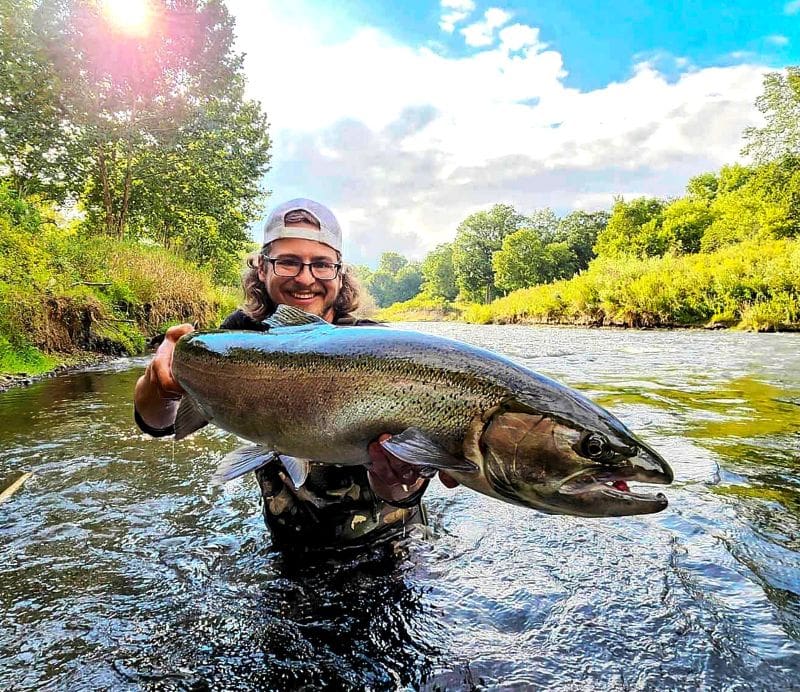
Pacific salmon species — including Chinook (king), coho (silver), sockeye (and their landlocked cousins, Kokanee), pink, and chum — jam into natal river systems draining into the Pacific Ocean, as well as the Great Lakes, where Chinook, coho, and pink are well-established. From a table-fare perspective, spawning salmon lose their appeal fast. The longer they sit in the river, the less palatable they get, since they’re on a one-way mission to spawn and die, usually within weeks. That matters for one reason: anglers locked in on salmon alone are missing the better option, and it’s often sitting right in front of them.
The Underwater Buffet
Most anglers view salmon as the star of the show. Experienced anglers know better — the salmon are the sideshow. They’re a moving feast, with females hauling precious, high-protein egg cargo upstream into the territory of fish built to capitalize on it. As salmon excavate gravel beds (redds) to deposit their eggs, they inevitably dislodge eggs and aquatic insects like caddis larvae, stonefly, and mayfly nymphs. Resident trout and temporary residents like steelhead abandon their usual wariness to feed heavily on this temporary buffet. And as salmon break down during the dying process, even their flesh becomes a food source for a wide range of species, fish included.
The Angler’s Opportunity: Targeting Trout and Steelhead
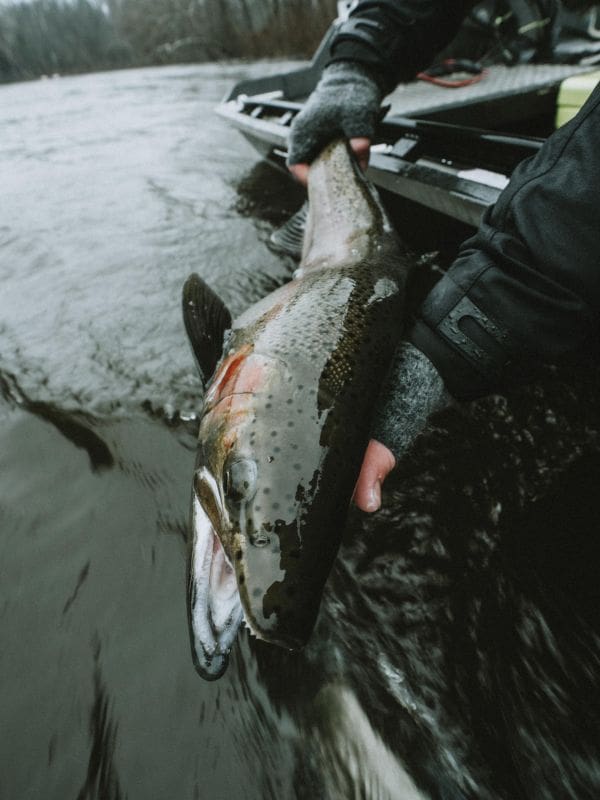
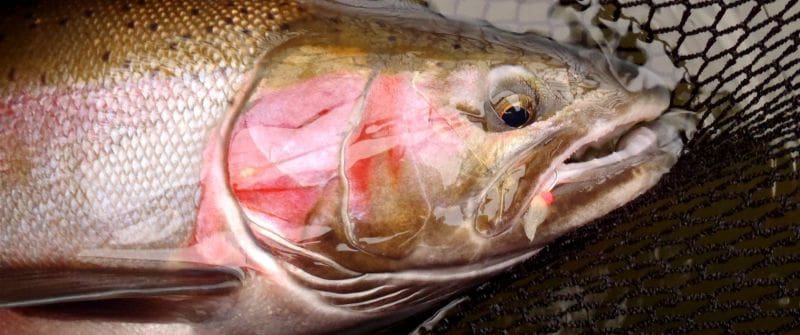
The biggest challenge for anglers is ignoring the salmon to focus on species that are in peak condition and fight with real zest when hooked. When conditions line up, you’ll find multiple trout and char species of various age classes, and potentially steelhead, feeding aggressively just downstream of the salmon. Where grayling exist, count on them too.
As a guide, I call this scenario “ripping eggs” — trout and steelhead darting around chasing eggs, occasionally bumping into each other in the chaos. Most anglers miss this opportunity entirely because they’re too locked in on the salmon, casting to them repeatedly expecting different results. These fish rarely bite voluntarily, and casting to them frequently ends in a snagged fish instead of a hooked one.
That’s where the terms “flossing” and “lining” come from — feeding the leader into a salmon’s mouth and setting the hook so it buries somewhere in or near the mouth, which is typically viewed as a legally hooked fish. To be clear, fresh salmon staging to spawn are some of the sportiest fish you’ll ever hook, and they provide outstanding sport the moment they enter the stream. But that window only lasts two or three weeks before they congregate on gravel flats with moderate-to-fast current to spawn. Chinook in particular dig huge, deep redds to incubate eggs — activity that, over the years, has reshaped entire stretches of river bottom.
Guide to Finding and Fishing the Feeders
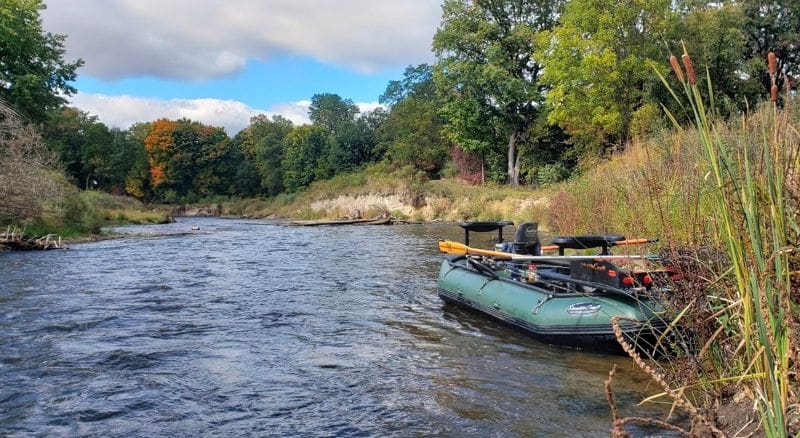
Locating Redds: Heavily redded areas are easy to spot — lighter-colored, round depressions on the bottom, with a high spot on the downstream side where eggs were layered in and incubated. Just off the back of that high spot, there’s often a sharp drop-off into moderately deeper water. River current scours the beds to prevent sedimentation and keep eggs oxygenated, and stray eggs naturally wash into this deeper “egg dump” just downstream, where hydraulics hold eggs and insects in place for feeding trout and steelhead.
Finding “Dark Water” Refuges: Salmon are often aggressive toward fish that creep into their spawning zone, but displaced feeders rarely travel far. Some trout and steelhead feed out in the open flats, but many take refuge in deeper troughs and pools downstream — what I call “dark water.” These spots almost always hold big fish keyed in on eggs and dislodged insects.Tackle and Techniques: Targeting feeders works with conventional or fly gear alike. Some anglers prefer skein or spawn bags, but yarn eggs (like glo-bugs) and beads are hard to beat when feeding activity peaks. Bottom-bouncing with a drift rod or fly rod is very productive, and float-fishing with centerpin or drift rods — or an indicator setup on a fly rod — helps keep your offering in the zone while avoiding the bottom.
Alternative Protein: If the egg bite goes quiet, throw them a curveball. Flies mimicking aquatic insects — green caddis larvae, stonefly, and mayfly nymphs — often do the job, especially teamed with an egg in a tandem rig where legal.
To Move or Not to Move: Don’t abandon a spot just because you’ve pounded it. Feeding fish shuffle around searching for active lanes, and a big hen salmon actively spawning will ring the dinner bell for any feeders downstream, so stay alert for spawning activity.
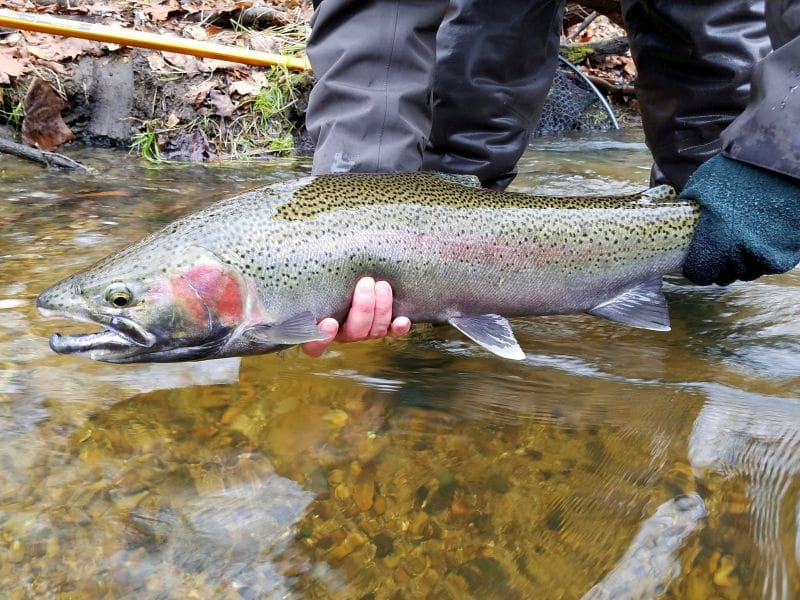
Targeting Steelhead: Steelhead — both summer-run and winter-run — feed heavily during this window. Summer-runs have likely been around a while, but fresh, chrome winter-run steelhead arrive in peak shape come fall for an incredible fight.
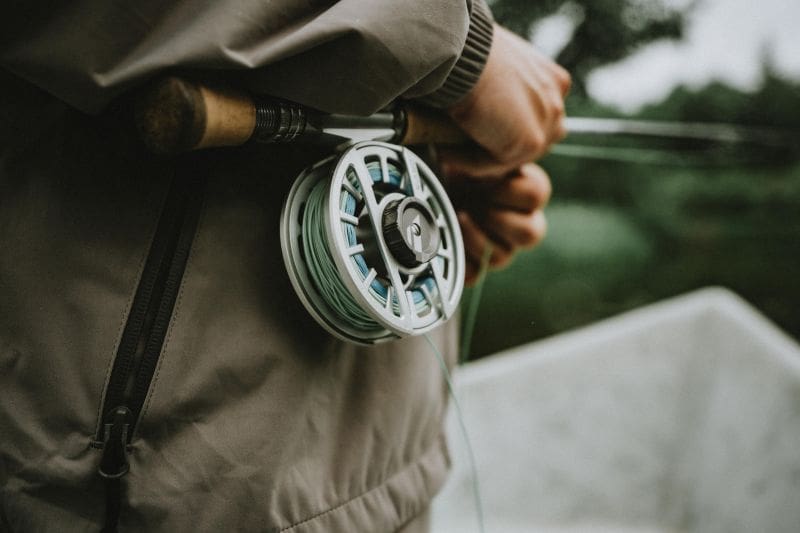
Gear Selection: Lean lighter than a dedicated salmon setup to protect the leaders and tippets suited for trout and steelhead. A 10- or 12-pound fluorocarbon leader is ideal — heavy enough to handle a stray salmon, light enough for trout and steelhead. Make sure reels carry a strong drag and leaders and tippet are fresh for severe duty.Timing and Conditions: Spawning salmon often take cover on bright days or spawn at night. Search deeper water with cover, since feeding fish keep taking eggs and insects even when salmon go idle. Early morning, evening, low light — that’s prime time.
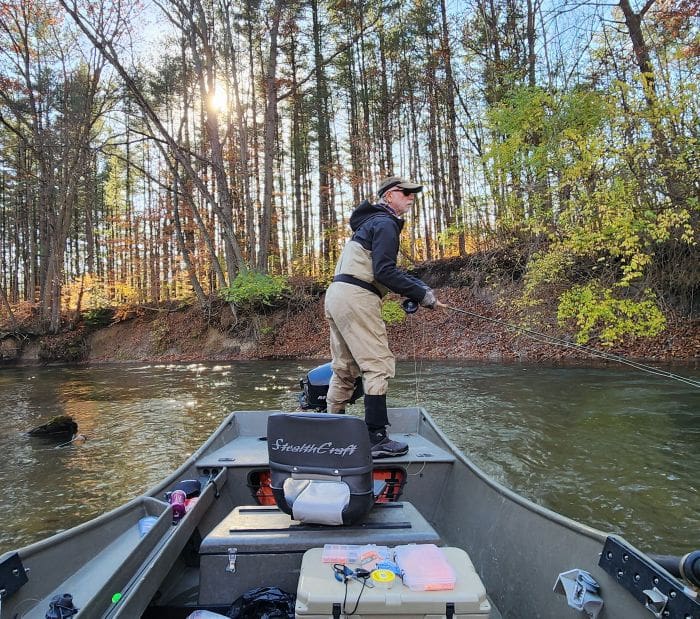
Tactical Comfort: Some of the best days on the water are drizzly, wet, miserable, and sunless. Fish that would normally stay wary in bright sun get bold hunting for food, so dress for it or you’ll be miserable too. Lean on polarized sunglasses rated for low light to spot fish, and skip bright colors like a cheap yellow rain slicker — these fish notice, even against a backdrop of fall leaves. Move with stealth. You’re surrounded by eyes evolved to dodge eagles, ospreys, and bears. Death comes from above — don’t be it.
Conservation: Many fisheries rely on natural reproduction, so avoid stepping on redds and crushing eggs or disrupting the delicate hydrology that keeps them viable. Resident trout and char spawn in fall too, and steelhead spawn in late winter and spring — consider releasing fish so they survive to spawn.
Bonus Tip: The same scenario plays out when steelhead spawn in late winter and spring. Resident trout and pre-spawn and “dropback” steelhead will be on the egg bite, offering some of the most consistent action just downstream of active spawners.
One Last Cast Next time you’re staring down a river full of thrashing salmon, remember: they’re not the whole story. Downstream, in the dark water and gravel flats, trout and steelhead are stacked up and feeding like it’s the last meal of the year. Fish the salmon if you want the photo. Fish the feeders if you want the fight of your life.