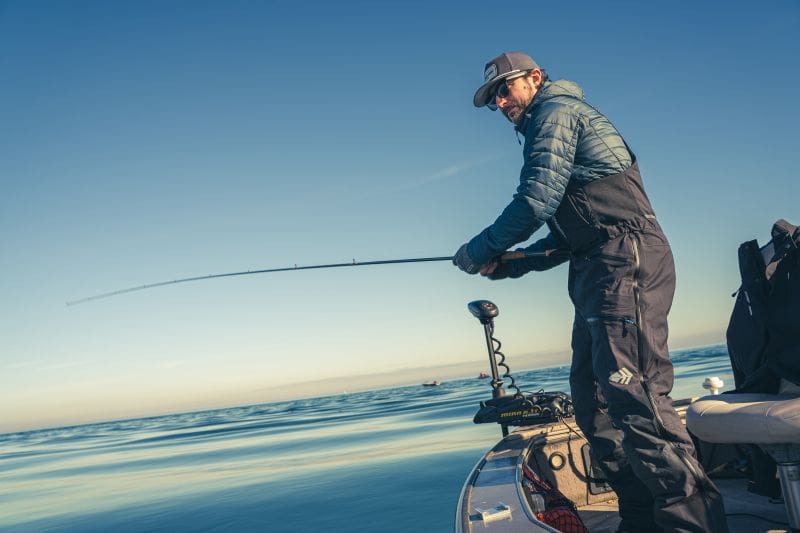
Take advantage of winter thaws to get out and catch fish
There’s a hardcore group of river rats who eschew fishing on hardwater to put the boat into rivers and take advantage of excellent midwinter walleye bites. In some places, anglers have been known to chainsaw icy launches to make it possible to put boats into running water. Across the Walleye Belt there are opportunities during mid- and late-winter to do just that. Take the Mississippi River for example, where some areas stay open year ‘round due to dams, and in some places, heated water discharges near power plants.
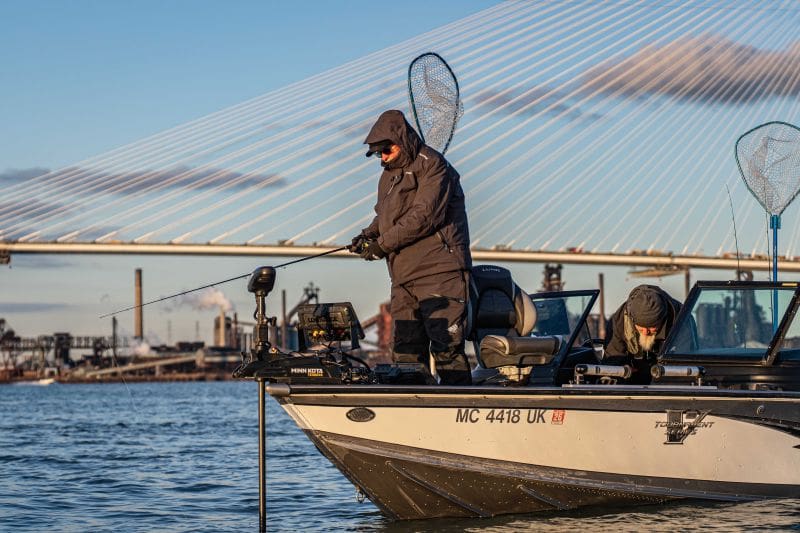
Preparation
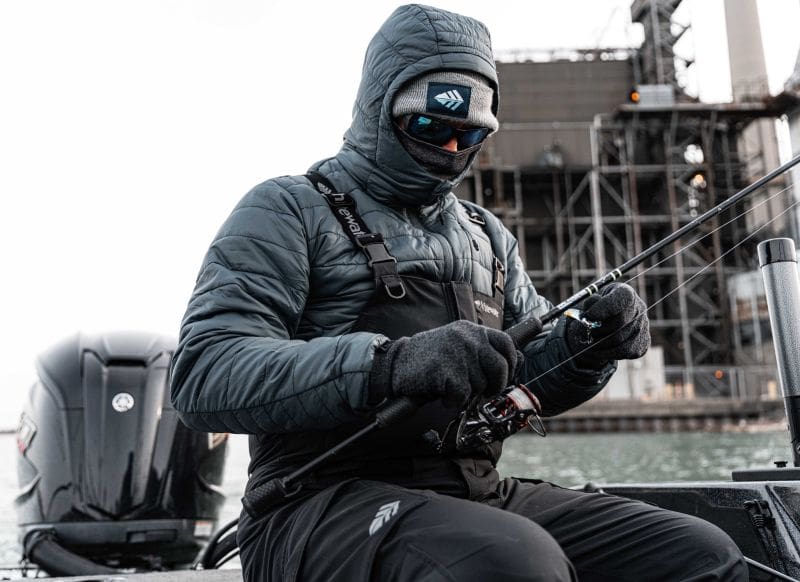
Ideally, your boat is in a heated garage and ready to fish when a few days of above-freezing weather coincides. To that, you’ll want to make sure all your batteries are fully charged. Also, make sure you dress for success. Ice fishing suits or mega-layering beneath raingear are a must; even on days that reach into the 40s, the breeze off the water can make it feel sub-zero. The Whitewater Great Lakes Pro (Jacket and Bib) with heated Torque vest underneath and wool fingerless gloves are a great combo.
Prepare for icy launches. To that end, carry a bag of sand or kitty litter to provide traction should you have any trouble. Common knowledge with river rats is to make sure you drain your boat at the end of the day at the water’s edge to prevent launches from becoming even icier for others.
Where to Fish
In winter, walleyes aren’t fighting heavy current. They want to sit in off-current areas where food drifts by and they don’t have to swim hard to eat. Their metabolism has slowed and they are prone to stack up in slack areas or areas of the river with low flow.
Dams and tailwaters are classic winter spots. Fish eddies and seams where fast water meets slow water. Deep holes are other high-probability spots. The deepest bends in the river typically hold fish, too, just resting from any metabolic drain of having to fight current or go far for food.
Bridge pilings are another area to investigate. The slack water current breaks directly behind pilings often hold fish.
Areas of warm water discharge are also a walleye magnet. If there is a power plant or industrial outlet nearby, walleyes will be there. Lastly, look for areas with your electronics that contain underwater dunes that walleyes can position behind. Troughs in seemingly straight river runs also hold fish.
How To Catch ‘Em
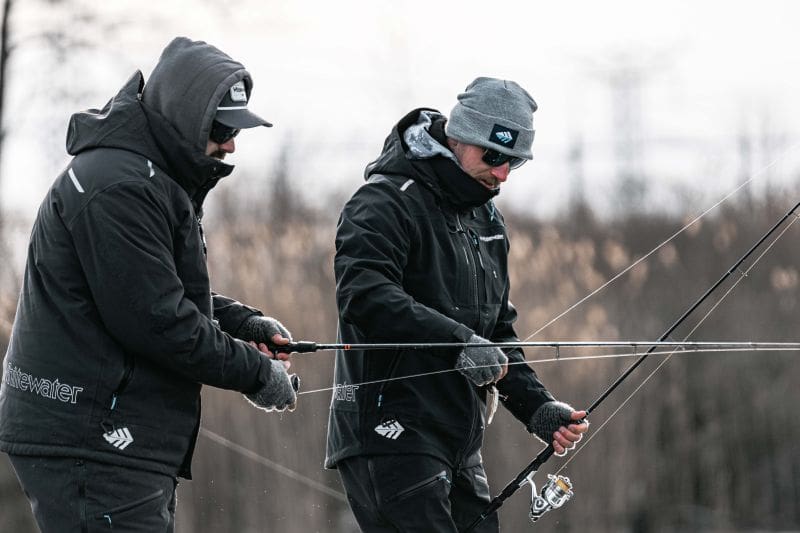
Winter is not the time for aggressive fishing. You want to slow down to match the energy of the fish. If you think you’re moving slowly enough, slow down some more. That’s the rule with vertical jigging, the golden standard for fishing winter walleyes. By staying vertical, you keep your lure in the strike zone longer and avoid snags.
Jigging
As far as gear, ¼- to 1-ounce jigs are requisite, specific weight being depth and current-speed dependent, typically paired with a medium-light or medium power spinning rod with fast action and a 2500 or 3000 size spinning reel. When it comes to line, monofilament has its place because it has more loft in the water and presents naturally. Braids, however, deliver superior sensitivity, but beware freezing line if it’s exceptionally cold.
To that end, carry a can of PAM or RAINX with you and spray down your guides; this helps prevent rod ice-up. Whether you opt for monofilament or braid, a foot to three-foot long fluorocarbon leader is recommended, attached to your main line with the tiniest barrel swivel you can tie; this also prevents jig spin, which can turn off potential biters. Hi-vis line is also recommended, which reveals when you hit bottom and can also reveal the slightest of bites.
While plastics will catch fish in winter, there’s really no substitute for fresh, lively local run minnows hooked into the mouth and out the back of the head – again, to prevent jig spin. In cold water, the scent and wiggle of live bait is sometimes mandatory to get bit. As far as jig movement, lift the jig two to six inches off bottom and let it thump back down, which creates a sound walleye can hear and locate with their lateral line in turbid waters. And here’s a must-have – short-shank jigs with stinger treble hooks. Winter walleyes are notorious short-biters. Having that extra treble will boat countless fish more than a jig without.
Bladebaits
If several days cooperate and you get warmer weather, fish may turn on and become more aggressive. If the bite turns aggressive vertical jigging, you might want to try a metal bladebait, which creates high-frequency vibrations that trigger reaction bites. The same vertical jigging gear will work for bladebaits.
As far as technique, you don’t want to overwork a bladebait, whether presented vertically or pitched cross current or to slack water. Use your wrist and make short, sharp hops. You want to feel the vibration for a split second, then let it flutter down on a semi-tight line to avoid the bait snagging on itself. The bite itself is typically on the drop after the wrist-pulse. You’ll lift the rod and feel weight. Even though the baits are metal, walleyes literally inhale them off bottom, thinking they’re live forage.
There are numerous bladebaits on bait shop pegs from which to choose. The important thing is that you carry a selection of weights (1/8-, ¼-, and 3/8-ounce) to match different depths you may be targeting. Colors, too, come into play. Bright chartreuse, orange, and firetiger patterns are a must-have, as well as standards in silver and gold. B FISH TACKLE B3 bladebaits are long-time river rat favorites. ACME and Berkley also make recommended bladebaits in a multiple sizes and colors.
Dragging Jigs
If walleyes are spread out over a flat or in slackish main channel areas, consider crawling a jig and minnow or jig and plastic just slow enough on a forward troll that you’re puffing up the bottom silt. Just make sure your jig is heavy enough to maintain bottom contact. In areas where more than one rod are allowed – as well as multiple lure rigs – consider doing the same with a Dubuque Rig, a rig with one heavier jig and plastic on a short leader attached to a three-ring swivel and a longer leader off the back with a super-light jig and plastic, hook and minnow, or walleye fly off the back.
Safety First
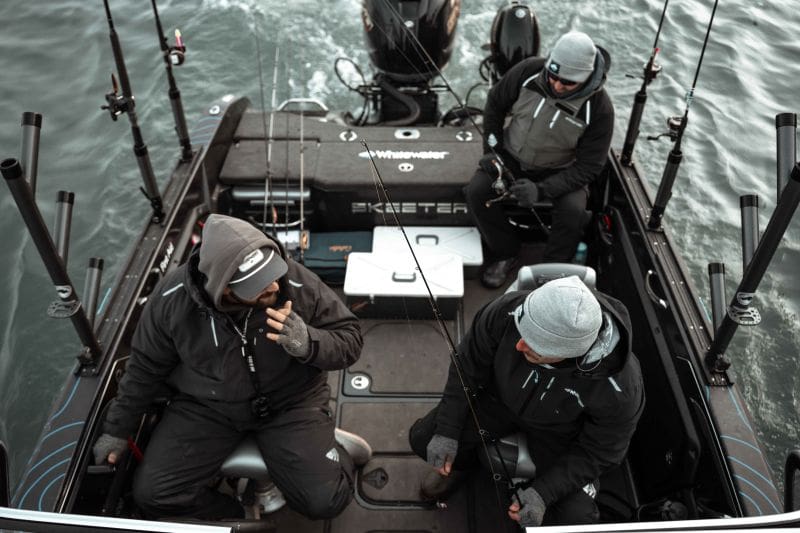
When fishing midwinter river walleyes, always make safety a priority. Water temps in the 30s and 40s can quickly cause hypothermia. Fish with a buddy, always keep your PFD on, and drive slow from spot to spot, keeping an eye out for floating shelf ice, which can do damage to outboard lower units and props, besides create a disruption that could throw someone out of the boat. Carrying a portable ski-boat ladder is a good idea, too, should someone fall out of the boat.
And again, make sure you have plenty of gas, fully charged batteries, and a jump-starter pack should your outboard motor fail to start.
Take Home Midwinter walleyes are known to group up in the areas mentioned, so bites can be notoriously good – if you’re willing to brave the cold. Never tried it? Investigate walleye-holding rivers near you prior to the next warm spell and give it a shot. You might just be surprised with the results!
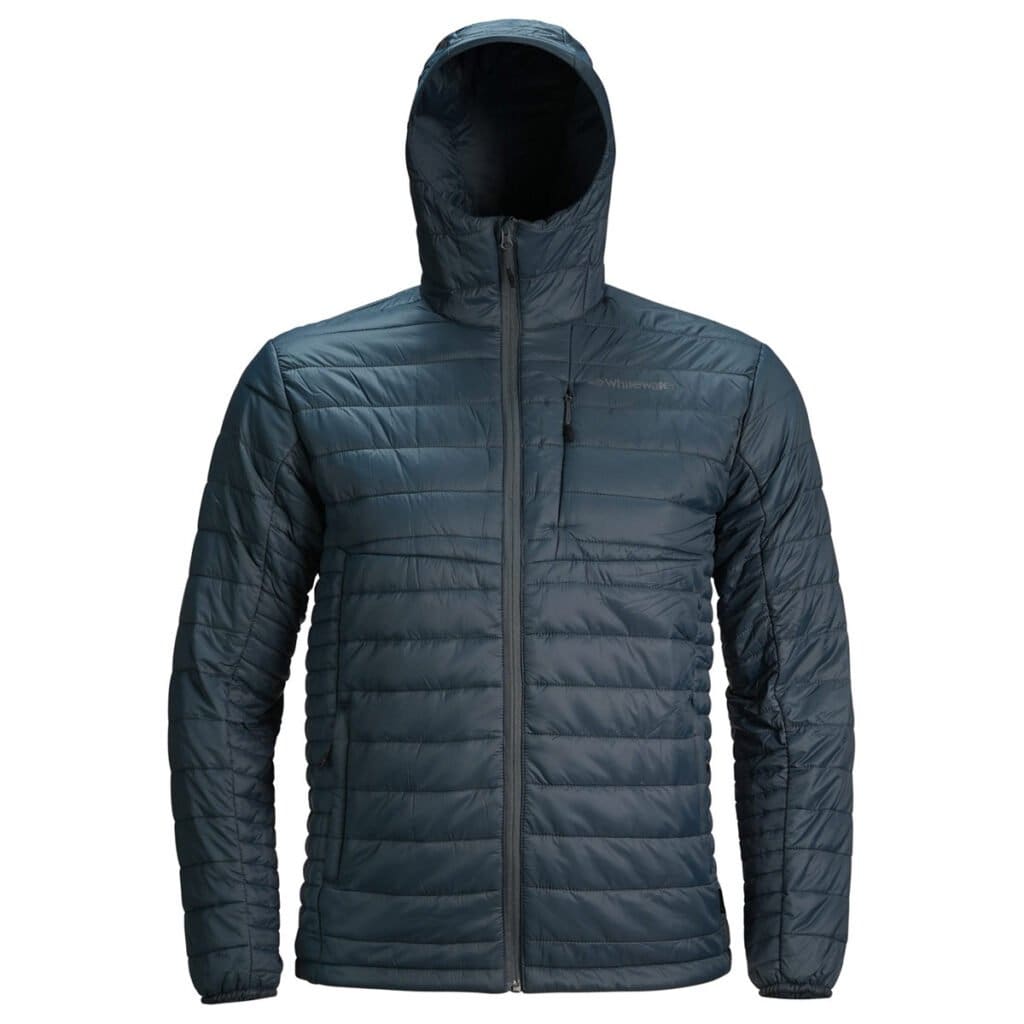
Thermoclyne Hooded Jacket FEATURES:
- Lightweight mobile warmth
- Serves as a standalone jacket or midlayer
- 100% nylon shell
- Wind resistant
- Thermal-mapped Sorona® Aura insulation (80g in the body, 60g in the extremities)
- DWR treatment helps shed moisture and resist stains
- Polygiene® StayFresh treated lining inhibits the growth of odor-causing bacteria
- Easily packs into its own pocket to store onboard for on-demand warmth
- High neck hood for extra protection in colder temps
- Three zippered pockets (2 waist, 1 chest) for secure storage
- Articulated elbows for improved fit and mobility
- Adjustable waist to lock in heat and keep moisture out
- COLORS: Storm and Dropoff
- SIZES: SM – 3XL
MSRP $199.99
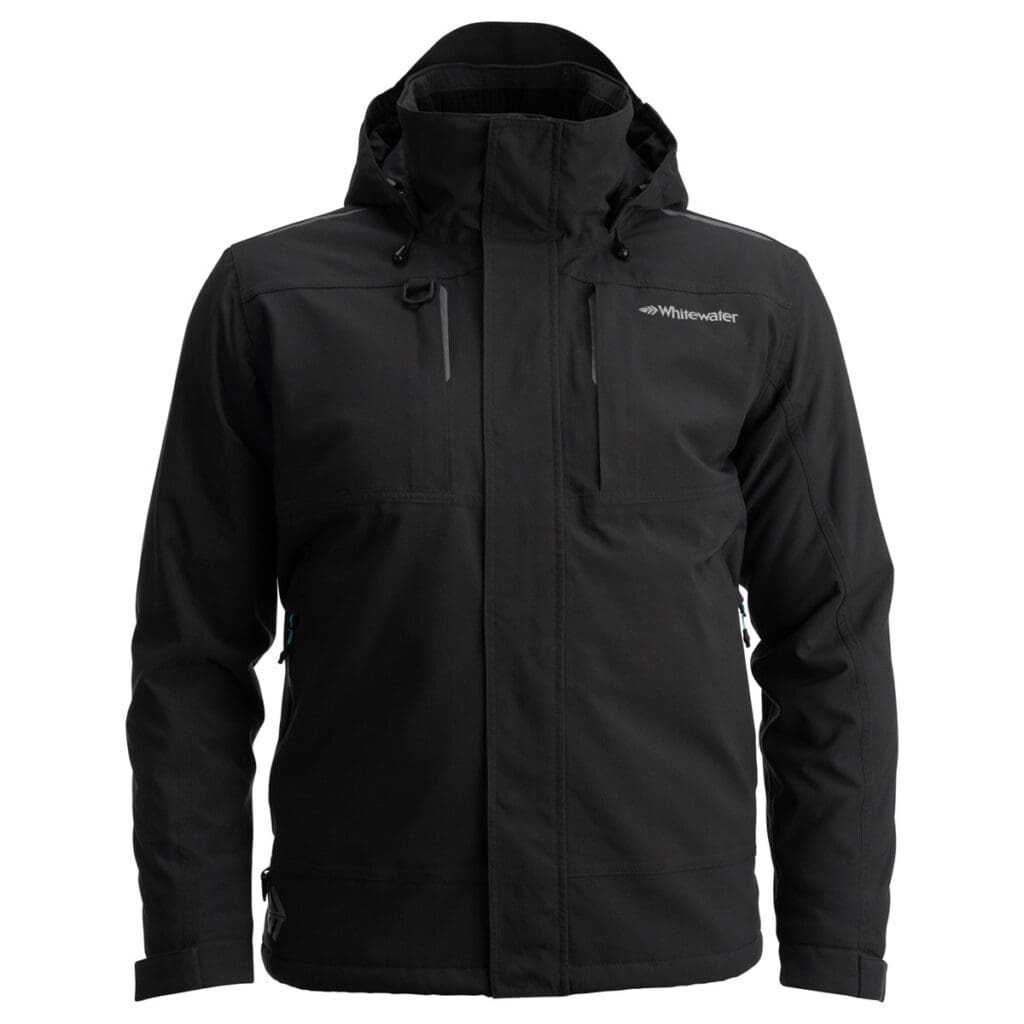
Great Lake Pro JACKET Features:
- Adjustable 3-piece hood and stiff brim to block rain
- High collar for extra protection and adjustments
- AquaGuard® Waterproof two-way main zipper
- Waterproof/windproof breathable 20k/30k lamination and taped seams
- Durable 3 layer design, stretch poly/spandex shell and polyester lining
- 4 AquaGuard® Waterproof zippered external pockets and 1 interior pocket
- 2 Sewn-in D-rings
- Adjustable hook and loop cuffs and adjustable waist
- Reflective logo tape for visibility
MSRP $399.99
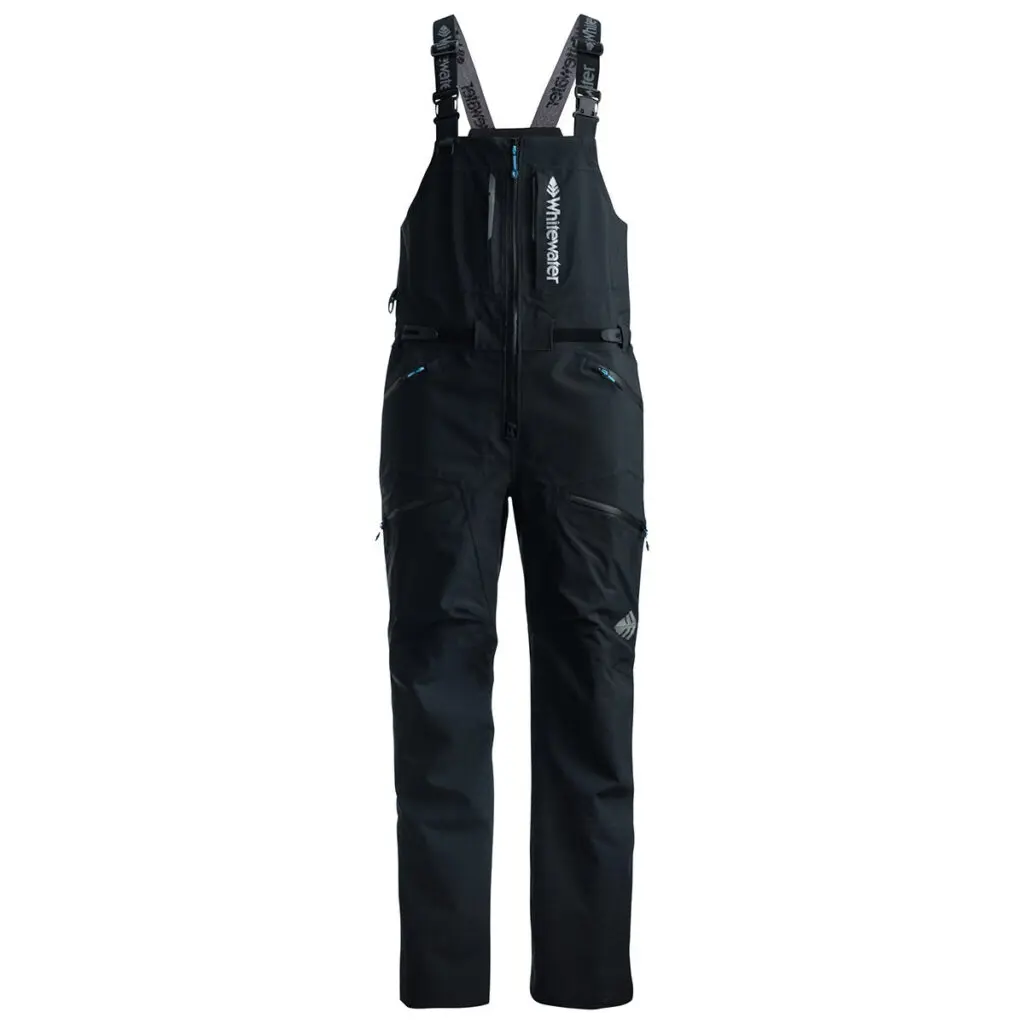
Great Lakes Pro BIBS Features:
- Adjustable suspenders with silicone grip
- Waterproof/windproof breathable 20k/30k lamination and taped seams
- Durable 3 layer design, stretch poly/spandex shell and polyester lining
- AquaGuard® Waterproof two-way main zipper
- Dual high-strength molded waist adjusters
- 2 Sewn-in D-rings
- 6 AquaGuard® Waterproof zippered pockets (2 chest, 2 waist, and 2 thigh)
- AquaGuard® Waterproof waist-high leg zippers
- Hook and loop cuff adjustments
- Reflective tape for visibility
MSRP $399.99